
What is a battery backup sump pump?
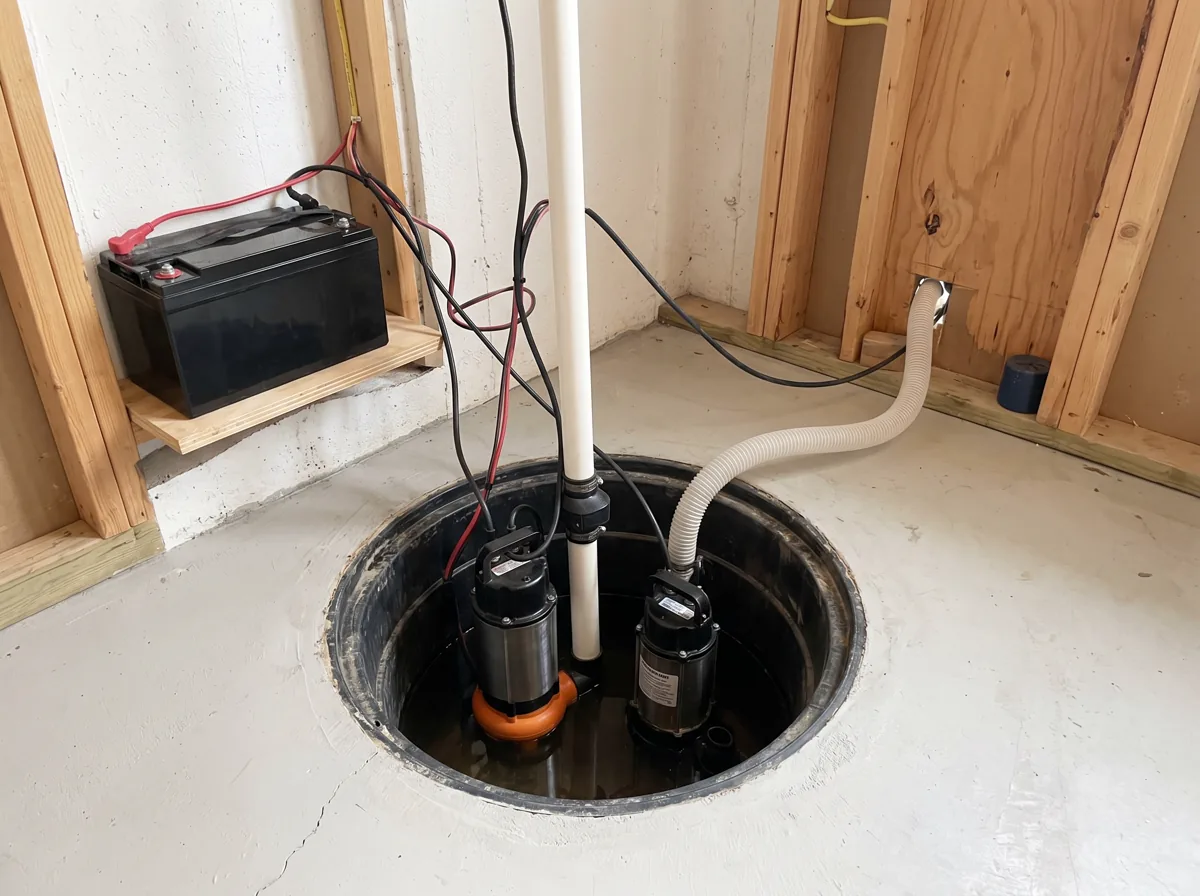
A battery backup sump pump is a second pump that sits in the same pit and runs on battery power, activating automatically when the primary pump loses power or cannot keep up with incoming water.
Most primary sump pumps plug into household power. During a storm, two things often happen at once: the pump is needed most, and the power is most likely to fail. A backup pump closes that gap, continuing to move water when the main pump cannot run.
Backup systems can also activate when the primary pump simply cannot keep up with a high volume of incoming water, giving the pit a second pump working alongside the first.
How a backup system operates
A backup pump is installed in the same sump basin, slightly above the primary pump's normal operating level. When water rises to the backup's activation point, the battery-powered pump switches on and pushes water through its own discharge line.
The battery charges continuously while household power is available, so it is ready when an outage strikes. When power returns, the system recharges for the next event. This design means the backup sits dormant and ready through dry, calm periods.
Backup systems can also activate when the primary pump simply cannot keep up with a high volume of incoming water, giving the pit a second pump working alongside the first. Either way, the protection is automatic — the homeowner does not need to be present or intervene.
The moment backups earn their keep
The cost of a backup pump is measured against what a flooded basement costs: flooring, drywall, insulation, stored belongings, and the disruption of cleanup. For finished basements, a backup system is often the single highest-value protection available.
It is also measured against the alternative of doing nothing. A backup costs a fraction of what a single basement flood can, which is why it is so often recommended for homes where the lower level is more than just storage.
Beyond power outages, backups also cover the second failure scenario — a primary pump that quits unexpectedly. See our guide to sump pump maintenance for how to keep both systems reliable.
Signs you should add a backup
A backup system is not automatically necessary for every home, but several situations make it a clearly wise choice.
- Your basement is finished or holds valuable belongings
- You have experienced power outages during past storms
- Your primary pump is older or has failed before
- You would be unable to run the pump manually during an outage
- Water has previously reached the basement floor
If any of these apply, a backup converts a vulnerable moment into a protected one. The cost of a backup is small compared to the cost of a flooded, finished basement.
Choosing battery capacity
Battery systems are matched to how long they need to run and how often the pump will cycle. A larger battery provides longer runtime but costs more and takes more space. The right size balances your typical outage length against the pump's demand.
Runtime is not a fixed number. It depends on the battery's capacity, the age and condition of the battery, and how much water is entering the pit. A system sized for your situation carries you through the outages that matter most without overspending.
Because battery condition changes over time, periodic maintenance and battery checks are part of keeping a backup dependable.
Battery backup vs. water-powered backup
| Characteristic | Battery backup | Water-powered |
|---|---|---|
| Power source | Rechargeable battery | Municipal water pressure |
| Runtime | Limited by battery capacity | Runs while water supply lasts |
| Best for | Most homes with standard pits | Homes with reliable water pressure |
| Considerations | Battery needs periodic checking | Uses water while running |
Battery systems are the most common choice in the Moline area. Water-powered backups can be a good option where municipal water pressure is reliable, but they are less common for residential pits and depend on an uninterrupted water supply.
Adding a backup to an existing system
In most cases a backup pump can be added to an existing sump pit without replacing the primary pump. The backup is positioned alongside the primary, with its own float switch and discharge connection.
This makes backup protection an easy upgrade for homes that already have a working primary system.
Adding backup protection is also a common choice during sump pump installation or sump pump replacement, since the pit is already open and the work is combined.
Keeping a backup ready
A backup system that is never tested is a backup you cannot rely on. Regular attention keeps it ready for the day it is actually needed.
- Test the backup periodically to confirm it activates
- Check the battery charge and condition before the wet season
- Confirm the backup discharge line is clear
- Verify the charger is operating when household power is on
- Replace batteries on the recommended schedule
What affects backup system cost
Cost depends on the pump capacity, the battery type and size, and whether the work is combined with other service. Larger batteries provide longer runtime and cost more. A system matched to your pit and typical outage duration provides the right balance of protection and value.
Combining backup installation with a new sump pump installation or a replacement is often more efficient than doing it separately, since the pit is already open and the discharge connections are already being worked on.
What happens when the power goes out
Picture the scenario a backup is designed for: a heavy storm rolls in, the sump pit is filling quickly, and the lights go out. The primary pump, plugged into household power, stops. Without a backup, the pit has no one left to move the water.
With a backup, the sequence is automatic. The battery-powered pump senses the rising water and switches on, pushing water out through its own discharge line. It keeps cycling for as long as the battery holds, which is matched to carry the home through a typical outage.
When power returns, the primary pump resumes, and the battery begins recharging for the next event. The homeowner does not need to be home, and does not need to do anything — the system handles the transition on its own.
Understanding backup batteries
The battery is the heart of a backup system, and its condition determines whether the backup works when called upon. Batteries slowly lose capacity over time, which is why they need periodic checking and replacement on the manufacturer's recommended schedule.
A backup that has not been tested in years is a gamble, not a safety net. The practical rule is simple: a backup system is only as reliable as its battery, and a battery is only as reliable as the attention it receives. Testing before the wet season confirms the whole system is ready.
Battery backup questions
How does a battery backup sump pump work?
A backup pump sits in the same pit and is powered by a battery. When the primary pump loses power or cannot keep up, the backup activates and continues removing water until power returns or the water is under control.
How long will a battery backup run during an outage?
Runtime depends on battery capacity, pump demand, and how often the pump cycles. A properly sized system is designed to carry a home through a typical outage, but runtime always varies with how much water is entering the pit.
Is a battery backup worth it if I rarely lose power?
Primary pumps most often fail during storms, when outages are most likely. A backup is recommended protection for finished basements and stored valuables, even if outages are infrequent.
Can a backup pump be added to an existing system?
Yes, a backup pump can usually be added to an existing sump pit alongside the primary pump, without replacing the entire system.
What maintenance does a battery backup need?
Backup systems need periodic battery checks and testing to confirm they will work when called upon, especially before the wet season. Batteries also have a recommended replacement schedule that should be followed so capacity does not quietly decline.