
What does sump pump installation involve?
Sump pump installation means setting up a complete system to collect groundwater and move it away from the foundation — including the basin, the pump, the float switch, the check valve, and a discharge line that drains outside.
Installation is required for new homes without a system, for finished basements being protected for the first time, and for replacing an outdated system that no longer keeps up. A proper install is not just dropping a pump into a hole; it is a matched system where each component is sized and routed correctly.
When an existing pump simply wears out, the scope looks closer to sump pump replacement in Moline, while a brand-new setup may require cutting a pit into the floor and running new discharge piping.
Knowing which situation you are in helps frame the right conversation and the right scope of work.
When is sump pump installation needed?
A new home or addition
New construction and lower-level additions often require a system to manage groundwater before finishing work begins.
A finished basement without protection
Finishing a basement is a strong reason to add or upgrade sump pump protection before installing flooring and walls.
An outdated system
Systems that are undersized, poorly routed, or decades old may need a complete new installation to be reliable.
Repeated water problems
If the pit overflows or water repeatedly finds the floor, the current setup may need to be reworked or replaced.
In each of these cases, installation is an investment in protection rather than a reaction to a problem. Getting the system right up front avoids the cycle of repeated repairs that a poor setup invites.
Submersible vs. pedestal pumps
| Characteristic | Submersible | Pedestal |
|---|---|---|
| Motor location | Inside the pit, underwater | Above the pit, on a column |
| Noise level | Quieter | Louder and more audible |
| Best for | Finished or living-area basements | Utility spaces with easy access |
| Service access | Requires lifting from the pit | Easier to reach the motor |
Most Moline-area homes choose submersible pumps because they run quietly and keep the motor below the floor. The right choice depends on the pit and how the basement is used, so it is well worth weighing both options carefully before deciding.
How sump pumps are sized
Pump capacity is not about square footage. A properly sized pump is matched to how much water the pit receives and how far it must be pushed. Two figures matter most:
- Flow rate, measured in gallons per minute, must exceed the volume of water entering the pit during wet conditions.
- Head height, the vertical distance the pump must lift water plus friction from the piping, determines how much real-world capacity the pump has left.
A pump that is too small short-cycles and wears out early. A pump that is oversized costs more than necessary. Matching the system to the pit and discharge keeps it running efficiently.
This is why sizing is done as part of a proper assessment rather than guessed from a catalog. The pit, the groundwater, and the discharge path all feed into the final choice, and each home's combination is slightly different.
New pit vs. existing pit
Installation looks different depending on whether a pit already exists. In a home that already has a basin, the work centers on the pump, the check valve, and the discharge connection. In a home without a pit, the install must first create one at the lowest point of the floor.
| Scenario | What it typically involves |
|---|---|
| Existing pit | Setting the new pump, connecting the check valve and discharge, and testing. |
| New pit, concrete floor | Cutting the floor at the low point, setting a basin, and connecting new piping. |
| Upgraded system | Replacing an undersized pit or rerouting a poor discharge while installing the new pump. |
How the right pump is chosen
Selecting a sump pump is a matching exercise, not a matter of picking the biggest model. Three things drive the decision:
- The volume of water the pit receives during wet conditions
- The vertical distance and pipe length the water must travel
- Whether the basement is finished, which favors a quieter submersible design
A pump matched to these factors runs full, efficient cycles instead of short-cycling or struggling to keep up. That balance is what makes an installation last.
How sump pump installation works
Assess the space
Evaluate the low point of the basement, the groundwater pattern, and the best discharge route.
Prepare the pit
Set or cut a basin at the lowest point so water naturally collects there.
Set the pump
Position the pump and float switch, then connect the check valve and discharge pipe.
Route and test
Run the discharge away from the foundation and test complete cycles to confirm operation.
Why discharge routing matters
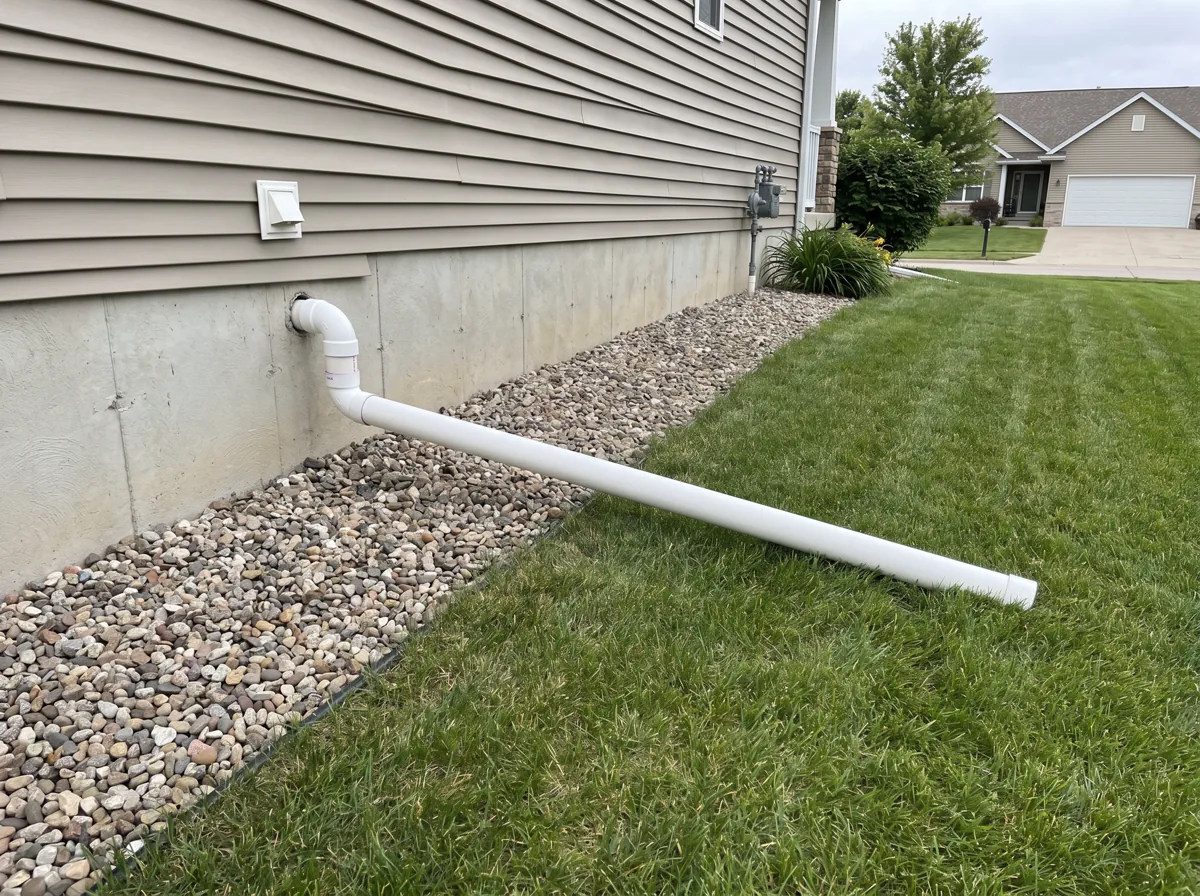
Where the water goes is as important as how it leaves the pit. A discharge line that ends too close to the foundation, lacks slope, or drains back toward the house sends the same water right back into the system.
Proper routing moves water far enough away and downhill so it drains naturally. When discharge lines clog, freeze, or leak, the whole system fails even though the pump works. See discharge line repair for more.
In short, the pump and the discharge line must be treated as a single system. An installation that gets the pump right but the routing wrong is only half finished.
What affects installation cost
Installation cost depends on whether a pit already exists, the type and capacity of pump, the length of discharge piping, and whether a backup system is added. Cutting a new pit into an existing concrete floor is more involved than replacing a pump in an existing basin.
Adding a battery backup sump pump during installation is a common choice that increases protection. Pricing is confirmed during evaluation, once the specifics of your space are known.
As a general principle, it costs less to install a system correctly the first time than to redo a poorly routed or undersized setup later. A little planning up front pays for itself in reliability, and the result is a system you can largely set and forget.
A word on safety
Installation involves cutting into floors and connecting electrical equipment. It is work best left to professionals who understand grounding, GFCI protection, and safe pit preparation.
Common installation mistakes to avoid
Most installation problems come down to a handful of avoidable mistakes. Recognizing them helps you understand why a careful install matters.
| Mistake | Why it causes trouble |
|---|---|
| Undersized pump | The pump cannot keep up with incoming water, so the pit overflows. |
| Oversized pump | The pump short-cycles, wearing itself out prematurely. |
| Poor discharge routing | Water drains back toward the house, undoing the pump's work. |
| Missing or failed check valve | Water runs back into the pit, forcing repeated cycling. |
| Incorrect float positioning | The pump turns on or off at the wrong water levels. |
A proper installation addresses each of these from the start, which is why the setup is as important as the pump itself.
Installation questions
Do I need a sump pump if my basement has never flooded?
Many homes benefit from a sump pump even without a history of flooding, because groundwater levels and storm patterns change over time. A pump provides ongoing protection rather than waiting for a first incident.
What type of sump pump should I install?
The choice between a submersible and pedestal pump depends on pit size, basement use, and noise tolerance. Sizing is matched to groundwater volume and discharge head height.
How is a new sump pump installed?
Installation involves setting the basin, placing and securing the pump, connecting the discharge pipe and check valve, and routing the outlet away from the foundation so water drains downhill.
How long does sump pump installation take?
A standard installation typically takes a matter of hours. Retrofitting a pit into an existing floor or adding discharge routing can extend the timeline, but most straightforward installs are completed within a single day.
Should I install a battery backup at the same time?
Adding a battery backup during a new installation is convenient and often more economical than retrofitting later, and it provides protection during power outages from day one.