
What does sump pump repair involve?
Sump pump repair means finding and fixing the specific component that has stopped working — most often the float switch, check valve, intake screen, or discharge line — so the pump can move water reliably again.
Most sump pump failures are not the pump itself but the small parts around it. A float switch that sticks, a check valve that no longer seals, or a discharge line that has clogged can all make a perfectly good pump look broken. Repair addresses these faults directly.
When a pump runs but water does not leave the pit, the problem is usually fixable. When the motor has burned out or the pump has failed more than once, sump pump replacement in Moline is often the better path.
The goal of repair is simple: restore reliable water removal without spending more than the system is worth. A clear diagnosis is what makes that decision straightforward.
When is sump pump repair needed?
Repair is appropriate when a system has a single, identifiable fault in a component that is otherwise worth saving. Homeowners typically call for repair when they notice one of these behaviors:
The pump makes noise but no water moves
A running motor with no discharge usually points to a clogged inlet, a blocked line, or an impeller that has lost its grip.
The pump cycles on and off too quickly
Rapid cycling can indicate a switch that is set or positioned wrong, or a pit that does not hold enough volume between cycles.
The pump runs without stopping
Continuous running is often a stuck float or a failed check valve that lets water pour straight back into the pit.
The pump trips its circuit
An electrical fault or a motor drawing too much current can trip protection, leaving the pit unprotected.
The common thread in all of these is that the system is sending a clear signal something is wrong. Acting on that signal early is almost always less expensive than waiting for a full failure during the next storm.
The most common sump pump problems
| Problem | What it usually means |
|---|---|
| Stuck float switch | The pump cannot tell when to turn on or off, so it either runs constantly or not at all. |
| Failed check valve | Water in the discharge pipe flows back into the pit, forcing the pump to re-move the same water repeatedly. |
| Clogged intake screen | Debris blocks the pump inlet, reducing flow or stopping the pump from moving water at all. |
| Clogged discharge line | Water has no path out, so pressure builds and the pump works against a closed system. |
| Worn impeller | The spinning part that pushes water loses efficiency, so the pump runs but cannot keep up. |
| Motor or capacitor failure | The pump hums or does nothing at all, indicating the motor or its starting capacitor has failed. |
Signs your sump pump needs attention
- Water remains in the pit after the pump has run
- The pump runs much more often than it used to
- You hear grinding, rattling, or a loud hum
- The pump turns on and off every few seconds
- There is an odor or visible debris around the pit
- The discharge pipe is not releasing water during a cycle
Any one of these signs is absolutely worth investigating right away. Together, they usually point to a clear and confident next step.
How a professional evaluation works
A thorough repair starts with understanding why the system is misbehaving. An evaluation typically looks at each part in sequence: the pit and its water level, the float switch travel, the intake screen, the check valve seal, and the discharge line to its outlet.
Testing the pump with water confirms whether it still moves its rated volume. This step separates a simple component fault from a pump that has genuinely lost capacity and is better replaced, giving you an honest recommendation either way.
The sump pump repair process
Diagnose
Identify the exact component that has failed and why the system is not moving water, checking each part in sequence.
Confirm the fix
Explain what is wrong and whether the part should be repaired or replaced for lasting reliability.
Repair the fault
Replace the faulty switch, valve, or component and restore the system to working order.
Test the cycle
Run water through the system and confirm the pump starts, moves water, and shuts off correctly.
Should you repair or replace?
Repair is the right call when the fault is isolated and the pump is relatively young. Replacement makes more sense when the motor is worn, the pump is near or past its expected service life, or it has failed before.
If you are unsure, an evaluation will clarify which path protects your basement for the best value. See our full sump pump installation and replacement guidance for context.
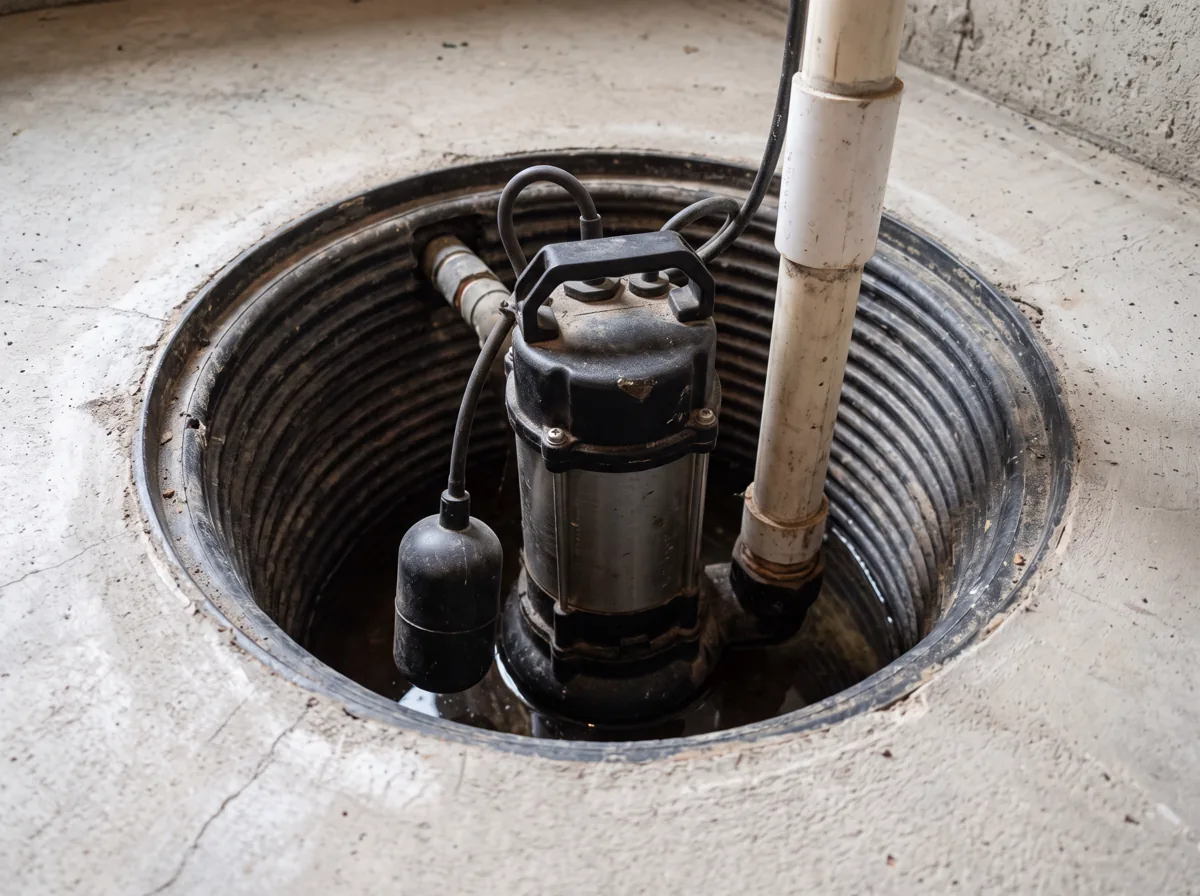
What affects sump pump repair cost
Repair cost is driven by the component at fault and how accessible it is. A float switch or check valve is generally inexpensive to address, while motor, impeller, or discharge work costs more.
In some cases, the cost of repair approaches the cost of a new pump, which is why an honest evaluation compares both options. Pricing is confirmed once the specific fault is identified, rather than quoted sight unseen.
If the system is older and the repair is substantial, it is often worth weighing the cost against a sump pump replacement in Moline, which may provide better long-term value and renewed reliability.
Is it the pump or the discharge line?
Many homeowners are surprised to learn that a "broken pump" is sometimes a pump that works fine, pushing against a blocked discharge line. Telling the two apart changes the fix entirely.
When the pump runs and you can see or hear water leaving the outdoor outlet, the pump is likely doing its job. When the pump runs but little or no water exits the discharge, the problem may be in the line, the check valve, or the intake — not the motor itself.
- Pump hums but no water leaves the outlet — check the intake and discharge path
- Pump runs, water leaves, then flows right back — likely the check valve
- Pump is silent when water is high — likely a switch or electrical issue
This is why a thorough evaluation starts at the outlet and works backward. It prevents replacing a healthy pump when the real problem is a discharge line that needs repair.
A word on safety
Sump pumps combine water and electricity. Never touch powered equipment while standing in water, and never open energized electrical components. Observe from a safe, dry position and let a professional handle the work.
Sump pump repair questions
What is the most common sump pump repair?
The most common repairs involve a stuck or failed float switch, a failing check valve, a clogged intake screen, or a restricted discharge line. These components wear or foul far more often than the motor itself, which is why a pump that seems "dead" is often fixable.
Why does my sump pump keep running without shutting off?
A pump that runs continuously usually has a stuck float switch, a failed check valve that lets water run back into the pit, or a blocked discharge line. Left alone, a constantly running pump wears out quickly, so it is worth addressing sooner rather than later.
Can a sump pump be repaired, or does it always need replacing?
Many faults can be repaired, especially switches, valves, and clogged lines. A pump with a worn or burned-out motor, or one that has failed repeatedly, is usually better replaced. An evaluation gives you a clear recommendation for your specific system.
How much does sump pump repair cost in Moline?
Repair cost depends on the faulty component and whether parts need replacement. Simple switch or valve repairs cost less than motor or impeller work. Pricing is confirmed during evaluation.
How long does a sump pump repair take?
Many repairs, such as a float switch or check valve, can be completed the same day. Repairs requiring parts may take longer depending on availability.